
Tommy Lefroy on Crumbling Empires, the State of Surrender, and the Age of Precarity [Q&A]
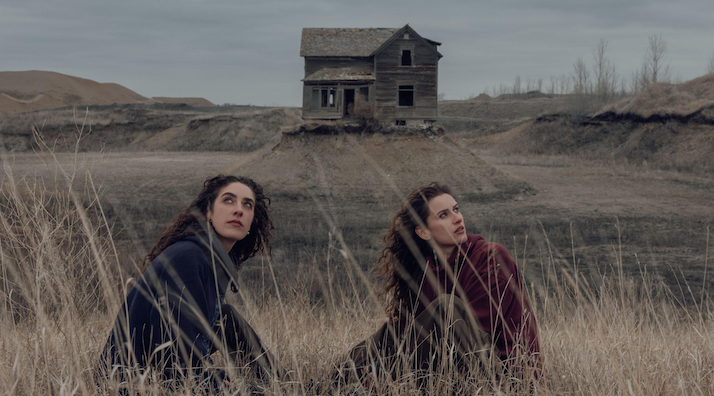
Don’t let the boyish name fool you. Tommy Lefroy is a girl band you’ll want to have on your radar.
Inspired by the nickname of Irish politician Thomas Langlois Lefroy, who is speculated to have been the real-life inspiration for Jane Austen’s proud and enigmatic Mr. Darcy, indie rock duo Wynter Bethel and Tessa Mouzourakis are reclaiming the name as a symbol of their shared ambition in the modern world.
“We were wanting something masculine,” Tessa mentioned. “We liked the idea of it being kind of a nom de plume.”
“Tommy had a ring to it. It’s such a boyish name,” Wynter added. “It carries this energy of reckless fearlessness that we were striving for.
The two first met in 2017, initially working as session songwriters for other artist’s projects in Nashville. But over time, they found themselves craving more honesty in storytelling.
“I DM'd Tessa in response to an Instagram story she posted singing a boygenius song and said ‘Can we start a band?’” Wynter recounted. “And at the time, we didn't live in the same city, so I was really throwing it out there.”
“We were both feeling pretty disenchanted in those moments, in that process, and we connected over wanting more from the music we were making, and the art that we were making,” Tessa said.
Over the last six years, the artist duo have been carefully crafting their upcoming album, The Precariat, set to release on October 23. Drawing influence from texts like Virginia Woolf’s speech “Professions for Women,” the resurgence of tradwife culture on social media, and the boldness of Bruce Springsteen’s paradoxical patriotism, The Precariat carries a wealth of research that extends well beyond your typical record. Tessa and Wynter host book swaps at their headliner shows and have even shared a reading list to accompany the album’s release, featuring works such as The Coming Insurrection by the Invisible Committee.
We caught up with the band just before their flight to the UK, as they packed their suitcases, to talk all things The Precariat. Catch a glimpse of what’s to come with their latest single, "Vacuum," out today.
OnesToWatch: The Precariat is coming out in just a couple weeks. How does it feel to be at the final release of this huge undertaking?
Wynter: It feels very surreal. We've been working towards this for a really long time, and it doesn't really feel real yet. I honestly don't even know if it'll feel real once it's out. We've lived with it for so long, I'm just excited for other people to hear it.
Tessa: Yeah. It's been a really long journey, but I also feel when it comes out, that's the beginning. It's an ending and a beginning. And I think now we're just really excited to get out and start playing songs live and sharing them, and have that real time connection with them. That's definitely the best part.
You’ve mentioned treating this record like a thesis, which I’ve never heard another artist describe their work in quite that way. But it also makes so much sense given the level of depth and thought you two have brought to it. As I was listening, I was thinking about how your music asks your listeners to be a little more engaged, thoughtful, requiring some sort of level of wanting to engage with the political and social landscape.
Wynter: We do feel very strongly that we're in a bit of a dire situation as a planet and the societies that we exist in, certainly in America. And so it feels like an obligation to speak to it, but it also was just permeating our experience. It was on our mind all the time. It was in our conversations with friends. It was what we were thinking about. We moved back to the States, it was Tessa's first time, but returning for me in 2024, and in America, especially in Los Angeles, there is a real, tangible sense of climate catastrophe, and the state of American politics, and the volatility of it. You feel it more when you're here. And so it was very much at the forefront of what we were experiencing every day as we were recording the record. It's crazy to me that any artist could make a record entirely about personal experience without even a faint reference to the urgency of what's happening in the world.
Tessa: We had no interest in, and we felt like we couldn't write a record that didn't speak externally or reflect on what was happening. We talk about this in our song “Anomie.” Being ignorant or feigning apathy can be a way of just dealing with it. It's like nihilism in a sense too. It's not productive and it's not helping humanity, but we all fall victim to it. We felt like we were at a point where we couldn't write music about our experiences in the world without speaking to the world as well, and what was going on. Like Wynter said, it felt like we had an obligation.
Wynter: This sort of ignorance as escapism mentioned in “Anomie” and “Slush Puppy,” maybe in part is something we're all consciously guilty of, but I also think there's something deeper. It's systemic, and especially my experience of being an American living in the UK and realizing the shortcomings of my education on history and global geopolitics. I think it's a bigger problem, and it's not a matter of pointing to the individual and accusing them of not paying attention. I think that, especially in American society with our media, we're conditioned to compartmentalize information and to disengage. There’s constant distraction and shiny things, and so that's also what we're speaking to in the record. We're a part of this. It's us too, but it's also a bigger thing.
Tessa, there was a quote that I stumbled upon where you say, "I have no interest in being an artist that's apolitical. To me, that's not art.” Can you tell me more?
Tessa: (Laughs) Yeah, it's wrapped up too in the way that art in our current climate is becoming a product. That quote came from me feeling absolutely burnt out on producing content over making music and making art. It's all about quantity over quality, and everything feels oversaturated. And I do feel strongly that the artists that I look up to and admire always had a position, and they were engaging with the world around them. They were expressing themselves and their political views, and they weren't concerned about alienating people. Art should be divisive. It should start conversations. It should be at times controversial. To me, neutral art, which is what people are selling right now because it has mass appeal, is not art. That's a product. But I think you're seeing people challenge it because we're living in a time where we're not interested in people being apolitical. Silence is a statement.
Wynter: More importantly, with this record, we're not trying to tell people what to think or what the answers are. We're just trying to encourage people to engage at a time when disengaging is not only a survival tactic, but is so normalized, and so that's what we're trying to combat. This habituation of disengagement. And I think it's shifting, but the polarization of American politics and the ways that people disconnect or are unwilling to try to see from the other's perspective, that's really damaging to our society. And so, trying to encourage a safe way of exploring what's happening in the world.
The title of the record comes from the words “proletariat” and “precarious.” It also exists in the title of a book on your reading list accompanying the album, The Precariat: The New Dangerous Class (2011) by Guy Standing. Did you come up with the name after having read this book?
Tessa: Yeah, it actually came up in conversation. I was talking to a friend about so much of what is on the record: feeling precarious, feeling futureless, feeling so anxious about the world. And he said in passing, "Well, you know, it’s because we're all part of the precariat.” And I remember being like, "Whoa, what is that? Stop! What did you just say?” I'd never heard the term before, but I immediately understood it as I related to it, and I wrote it down. And the next day, we were in rehearsals for the Niall tour, I went to Wynter, and was like, "I know what we should call that the record.” We did more research. We read the book. We started reading accompanying texts, and it just sort of was the thing that started the thread of the record. It was very exciting because I had this full light bulb moment.
Wynter: When you said it, I definitely had an instant gut feeling that was definitely the title of the record. Similarly, I identified with it right away without understanding the definition. And then, I read the book, and Guy Standing is the British economist who coined the term, and so, his work has been integral to our understanding of it. “Anomie” was a word that we also took from his book. He listed four conditions of the precariat: alienation, anomie, anxiety, anger. And he explains how all these things led up to these conditions, globalization, mergers, and acquisitions. There's so many factors, but there's a common thread, and that's what's so interesting about the precariat. It's a very wide range of people that maybe didn't previously have a lot in common, that are all experiencing the same conditions, born of precarity, and it just instantly felt resonant.
The progression of the album starts from this place of looking inward, and forgiveness, then takes us through a roller coaster of themes like the resurgence of tradwife culture, hyperconsumerism, and paradoxical patriotism. What is the journey that you hope that listeners are taking on when listening to the album in full?
Tessa: I felt really strongly I wanted “All Things Forgiven” to be the first song because I really liked the idea of it feeling like this opening to the record, sort of like a statement. In Shakespeare when the narrator comes out first and is like, “Ladies and gentlemen, before we begin, we want you to know all things are forgiven.” I felt like it was important, that we're about to take you on quite a journey. There's a lot of heartbreak and hard feelings, and shame as well, and I really liked the idea of opening with a song about reconnecting with the self, the child self, connections with others, and just emphasizing the human experience and forgiveness as the first song.
Wynter: There's a range of experience covered, but the loss and return to self is a perpetual theme and experience that's very felt in the record. The importance of moments of intensity and then moments of reprieve, or flickers of hope. “All Things Forgiven” is such a raw, vulnerable opening. Tessa brought the idea, and the first time I heard it, immediately there was such a vulnerability to it, you can't help but go to that place. The second track, “Angel in the House” was definitely one we wanted early in the record to get it going. It travels through everything, from situationships, and there's a slight maturation as the record goes on. Later songs are a lot more about coming to terms with things. As we've gotten older, that's where we've turned to songwriting. When we were younger, it was a lot of writing about the moment because the moment was so intense. And as you get older, some of the more intense experiences you have are actually reconciling everything you've been through and coming to terms with things not turning out the way you wanted.
Can you take us through your lyric-first writing process?
Wynter: A lot of times we write lyrics and melody at the same time, but we love writing to a title. And a lot of the songs on the record started as titles, things we glean from what we read. I read this book called Art Monsters by Lauren Elkin, which is a cool collection documenting feminist art. And from that book alone, I wrote down “Angel House” and “Rokeby Venus,” and “In Paradise, War Is Prevented by Mothers” as a reference to a film. So definitely we like writing down titles, which I think that's kind of a vestige of…
Tessa: Nashville.
Wynter: Yeah, our time in Nashville led us to that because that was something that we were always doing as songwriters, writing down ideas for titles. We especially struggle with the second verse because then you're returning to a melody with a new lyric, right? So we always get stuck at the second verse.
Tessa: And we overthink, because it feels like the second verse is when you re-examine the thesis, or add exposition, or details. It also feels like one of the last chances to really say what you're trying to say. Sometimes we'll have written entire poetry stanzas that we then translate into a melody. It really depends on the idea.
This album was six years in the making. How did the songs or ideas transform over time? And did it end up different than you envisioned it would in the beginning?
Wynter: Totally
Tessa: “Threat” and “Thief” we wrote in 2019 in Nashville.
Wynter: And they were some of the first songs we wrote together.
Tessa: Yeah, and “Thief” was funny because we had tried at various stages to produce a demo, and we just struggled to find a sound that felt right for it. In a way, it was probably telling us that it needed to be on the album. We worked with this great drummer, Brett Kramer, and he started playing this fun, almost jazzy beat under the verses, and it started making sense a bit more. We just needed more time with it. And same with “Threat.” We rewrote lines and added a verse and changed a few lines, but more or less, it is kind of like the song that it was in 2019, which is cool.
Wynter: When we knew we wanted to call the record The Precariat, which was just a couple years ago, those songs still really felt relevant, like they fit into the theme. And because precarity is something we've been feeling for a long time, and existential precarity is something we've felt since we were kids…it's something we have thought about a lot, so the songs still really felt like they fit in with the world of The Precariat.
“Vacuum” is out today. And that song is a little more of a personal song about how you came together, your journey. Is there anything that you hope that listeners take out of it?
Tessa: It's really about our experience as the band and our friendship, and I think it's just one of the few truly introspective songs on the record, which was fun to write. It's very literal, we're truly just storytelling.
Wynter: It’s unique in the scope of our whole catalog in that a lot of what we write is an amalgamation, or direct reflection, of our individual experiences, often because it's intensely personal. But this song is a more direct journal entry of things we've experienced together. We've been on a journey. I loved the idea of this metaphor of vacuum because it originated as a metaphor for the pressure we felt when we both were living in London and didn't really have any friends or community other than each other. We were trying to get the band off the ground, and we took it very seriously and put a lot of pressure on ourselves, and that was all the weight that our relationship was carrying as well. I feel it's sometimes rare that bands are honest about how difficult it is. Especially with a duo, when there's just two of us, if we disagree, there's no equalizer. We've just been through a lot and navigated a lot together. But the biggest thing I hope is that people can relate to it. Any experience where it means the world to you, it feels so big to you, but then when you zoom out, it's kind of small in the course of your life…I've had a lot of moments in relationships like that, but I think nothing in my life compares to our relationship and everything we've been through. Anyone who's experienced that kind of intensity, or a pressure around trying to build something with someone else when the odds are against you, I hope that people can relate to it.
The lyrics "built an empire in a vacuum" come to mind, and I’m wondering do you feel any tension between writing from personal experience and having that experience interpreted through the larger conversation about the world?
Wynter: Empire was a word that we were thinking of because The Precariat, in many ways, is about our crumbling empires around us. We had just read One Day, Everyone Will Have Always Been Against This by Omar El Akkad, and he talks a lot about empire and the ways it impacts our perception as Westerners, and there are so many biases that we carry. Our use of the word empire there, it's a representation of the Western mind. And the language we use is conquer, slay, but it also was a line written in jest because when we were building the band, and you start to get a few fans, you get this sense of disbelief that people are invested in you. And you feel like a false prophet, this sort of impostor syndrome, this sense of we're building this thing, but it's not real. Or it's very small, only real to us.
Tessa: Yeah the language is grandiose, but we meant it in a sarcastic way. On that note too, everything is open to interpretation, and I've kind of accepted that. We had intentions behind the language, or how we wanted to communicate it, but ultimately it's up to the listener.
Wynter: The sense of worrying how people interpret things, I'm certainly guilty of it in the writing process, but once it's done and it's going to be released, you have to let that go because sometimes I listen to things we released in the past and I hear a new interpretation that I never thought of in the moment. It’s happened quite a few times because I think we are of one mind sometimes. And then I'll listen from a truly outside perspective a few years later, and I'm like, “oh wow, people might think this song is about something totally different than it is.” But I also think that's the beauty of it, and the best music has an ambiguity to it that different people could interpret in different ways.
I love the title of "In Paradise, War is Prevented by Mothers,” which you mentioned comes from the French documentary Sans Soleil from 1983. How did the film influence the song?
Wynter: I watched it years ago with my flatmates in London, and that was just a line that stuck out to me, and I wrote it down in a notes app poem in 2022. And it had just always been with me. Then I got that melody idea, I thought it'd be a cool opening, or interlude. I loved how layered it was. It's such a beautiful phrase. It feels gracious and redeeming and…
Tessa: Romantic.
Wynter: Yeah, there's something pure and romantic about it. And when I was thinking about it, I felt a little frustrated because I'm like, well, wait a minute, it's kind of this ongoing sense of women taking on the onus for the actions of men that we see constantly in our society. I was like, Is that a title we want? Or, is that good? That's part of the experience? The initial reaction, and then the dissection, and frustration. But it's ultimately also about our mothers and the energy of our lineage and the women who came before us, and we feel them with us all the time. And I think we really wanted a song on the record that was like that.
Tessa: Even in the lyric, “there are times when I / I've seen her surrender,” we talked about surrender being both positive in the way that you're able to surrender to what may be or what happens, or let go of things you can't control. It also, on the other hand, means surrendering to some larger external power, like a patriarchal energy and force. Compromising. So it had the double meaning. To me that song is so full of contrast, which we love.
Wynter: Something we both struggle with is compromise and surrender, so we really hit both of those.
I'd love to talk sonically for a moment. In “In Paradise, War is Prevented By Mothers,” it’s very heavenly in soundscape. The song "Turbulence Over Canada,” creates a bit of that rumbling feeling, mimicking what turbulence might sound like. Are there any other musically driven moments that you hope listeners will experience in the record?
Tessa: Totally. The end of “The Precariat” falls into this big finale. We did a lot of processing on the drums, we used strings, and we actually took samples from other songs on the record and brought them back. There's melodies from songs on Flight Risk that we actually sing in the background, and it felt like this cacophonous way of creating the feeling of precarity, what “The Precariat” feels like. I just picture living in LA, there's helicopters all the time. The strings to me visually look like helicopters.
Wynter: Mike Crossey mixed things circling around your head, like scary little voices. We used an ARP Omni synth, and the verses, to create a helicopter soundscape. It was also really important to me that the outro had this pendulum feeling, like you're swaying back and forth. We use a lot of side chaining on everything, and it's supposed to replicate feeling disoriented and overwhelmed. The bridge of “Thief” is a moment of the record I'm really proud of. We kept some samples from our original demo. It's our baby voices in there…
Tessa: Yeah (laughs) literally.
Wynter: And Stephen Sesso, who co-produced the record with us, filtered and distorted this acoustic guitar and it took on this nostalgic grungy feeling, and I really love that moment on the record. The outro of "Threat" is one of my favorite parts, and that was a last-minute idea. I wanted to throw in this lyric, "Good things happen,” which kind of comes out of nowhere, but felt like it needed some kind of a redeeming. It's such a heavy song, and it was really heavy to make, and it was the heaviest thing for me to sing on the record, but sometimes those songs feel important, you know? If it's hard for you to talk about, then anyone else experiencing it may also not have someone to talk to about it, and that's where I hope music can help people. And so, I was like, well, what if we just tack on this little slight glimmer of hope and this moment of surrender to just let things happen and and not let the bad things that happen to you cloud your vision from seeing the good in the world, and in your life. I really loved the way that that outro turned out. There's a lot of cool layers. Stephen added this little guitar line, it's just the cherry on top for me. It's so good. And Mike nailed the mix. Also, the first mix we got of that one, I don't know if I've listened to it without crying, and that's saying something.
You speak of surrender a lot. Do you feel surrender has been something that you’ve grown to experience over the years?
Tessa: I've been trying to lean into it. It's been really hard for me, I don't surrender easily. I will claw my way through and out onto the other side, always. I've been thinking about this a lot actually because we've been asked a lot of questions in regards to how it feels to be alive in the world today, and what does that mean, and I've been thinking a lot about process and outcome. I've always been very outcome-driven. Being the eldest daughter raised by immigrants, I put so much pressure on myself, and I put the onus of control on myself. If something doesn't go well or something doesn't happen the way I wanted to, it's 100% my fault. Surrender is something I really struggle with, and as I get older, it's been easier, but it's still a journey. I'm trying to learn to lean more into the process, to surrender to the experience of it, and put less emphasis on the outcome because that is ultimately not something that we can always control. And that's taken me a long time to accept. And sometimes I don't accept it still, sometimes I will hold on to the bitter end
It’s a lifelong journey.
Tessa: It is. When Wynter brought the line “I've seen her surrender,” in “In Paradise,” I remember it was so funny, I immediately thought it was negative. Well, not negative…My initial reaction was we shouldn't surrender. We should never surrender. And it was so funny because Wynter was presenting it to me as, “Isn't that amazing that I see her surrender?”
Wynter: Well, you’re supposed to have that experience of initially interpreting it as that. That's also how it came to me. The difficulty of watching someone you love compromise, especially to someone they're in a relationship with. But then the other side of it, a mother's capacity to release and make all things well. You're supposed to have that journey.
Tessa: It was just funny to me, what it said about myself and the way that I approach things.
Wynter: We are very similar in that way. And I’m very similarly results driven, I was very much raised with that energy. But in our experience as a band, we had a lot of changes and letdowns, we got dropped by most of our team in the last two years. A lot shifted for us, and we really saw the undersides of the industry where one minute people are excited, and the next minute you're not making the cut. We had a lot of experiences as a band that were hard and disheartening, and in order to keep going, you have to learn to let it go and not carry it with you because you can't keep going with the weight of it all.
You say “The Precariat” makes fun of the ridiculousness of pursuing a career in music in times like this –
Tessa: Yeah, that's the cult of self line.
Wynter: It was actually one of my favorite lyrics.
Tessa: I was reading this book by Mark Fisher, where he talks about how “It's easier to imagine the end of the world than the end of capitalism,” and it's really shaped how we experience being musicians right now, and what it means to make art and be a musician. Being the product and selling yourself, and just our experience in the industry too, the types of conversations we're having with people, and what's expected of us, and then also how incredibly silly it feels a lot of the time when you zoom out and think about the world, what's going on, and what we are doing.
Wynter: We felt there had to be something displaying self awareness, but being an artist is a very inflated example, an extreme version of it. The cult of self is a deeper idea. I just read this book called End Times Fascism by Naomi Klein and Astra Taylor, and they talk about this era of the influencer and the importance of the self and the self-brand and all of that is kind of a precursor to the era of fascism we're in. But it's such an interesting concept because we are in an era of the self-brand, and the emphasis of the individual has led to this downward spiral of our society because we're losing a sense of the collective, especially in America with social media. So it's a funny line about us being self-deprecated, but it's also a really interesting wider concept too.
What book are each of you currently reading now, and would you recommend it?
Tessa: For the plane, I'm reading Walking Through Clear Water In a Pool Painted Black by Cookie Mueller. I was reading the first Lord of the Rings because sometimes I think escapism is allowed, and it's important. But I also just finished Age of Insecurity by Astra Taylor and Technofeudalism by Yanis Varoufakis, which are great on the state of things.
Wynter: Literally it's so heavy it's ridiculous that I'm bringing this with me but I'm in the middle of this book called The Global Gamble: Washington's Faustian Bid for World Dominance by Peter Gowan, and it's really good.I found him through a new leftist article about NATO and the dissolution of Yugoslavia. I love his writing because of all of the themes we're talking about, and the role of globalization, the World Bank, and the Dollar-Wall Street Regime, the origin of all those things. I was constantly hearing it referenced, but felt like I didn't really have an understanding of it. It is dense, it's not like a fun, cute read, but I would recommend it. I was going to bring six books on this trip because we're gone for like a month, and you wouldn't believe how full every single suitcase is, so I'm only bringing three. The other book I have with me in my suitcase is called Fights! by Scott McClanahan, who's an author that we're a fan of, and he follows us on Instagram. And I'm really excited to get into his new book. I haven't gotten a chance to start it yet, but I heard it's very good.
Anything else on your mind?
Tessa: We're really proud of the visuals for this record. We worked with Brendon Burton, this incredible photographer, and Sam Tetro, who's the DP. And it was me, Wynter, Sam, Brendon, and our manager, Wes, in a van, driving across the plains of North America. And we shot everything ourselves. We truly were in real abandoned spaces. Every single one of those images was shot in this thing that exists, and we happened upon it, and we left it exactly as we found it. We felt like it was really representative of the sonics and the messaging around the record, and what Wynter was saying, “crumbling empire.” Also, what is left of us. Some of these places had been left 20 years ago, and obviously there was dirt and dust, but plastic remains. These things are being overgrown by nature, but they're still there.
Wynter: Yeah, like permanence, and impermanence, and what remains. It was kind of a time capsule of the early 2000s and early childhood. It felt weirdly emblematic of so many themes on the record. And the album cover is a real house that has been completely excavated around. Truly, surreal. When we pulled up to the location, it was so unreal to see. Just felt like a very obvious metaphor for the precarity, the precariat, and for precarity.
![BOY SODA Dives Deeper Into SOULSTAR With His Deluxe Edition [Q&A]](https://s3-us-west-2.amazonaws.com/onestowatch-v2/untitled-1790796922.jpeg)
![corook x Whale Songz On the Art Of Following The Fun [Q&A]](https://s3-us-west-2.amazonaws.com/onestowatch-v2/i_m_g_3955-1790626986.jpeg)
![Maria Fuell Is Bringing the Sounds of the Andes to a New Generation [Q&A]](https://s3-us-west-2.amazonaws.com/onestowatch-v2/i_m_g_9202.jpg-1790624210.jpeg)