
FIGHTMASTER Explores a New Relationship with Empathy on Debut Album Tolerance [Q&A]
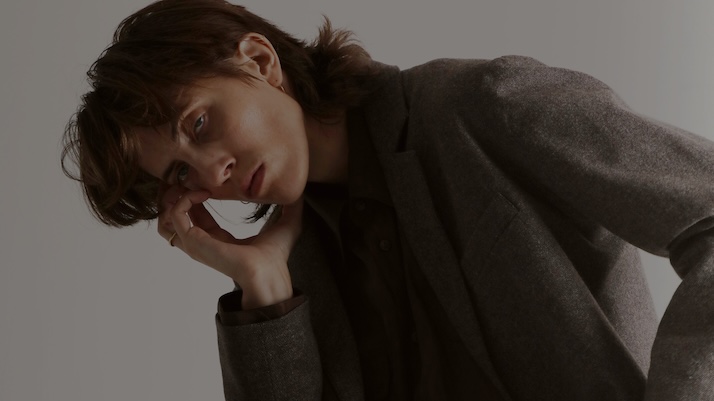
E.R. Fightmaster is everywhere these days. Maybe you’ve seen them on Grey's Anatomy as its first non-binary doctor. Or maybe you’ve seen them on Hulu’s Shrill, the incredible Sorry, Baby, or on their sports podcast Jockular. Or, like me, you caught them doing improv at the Upright Citizens Brigade Theatre here in L.A. There have been a plethora of ways to get to know E.R. Fightmaster over the years, but in perhaps their most vulnerable project yet, their debut album, Tolerance, drops this week, and it’s a remarkable statement on self-discovery, recognition of personal truths, and lessons learned having to figure out who you are in a world that doesn’t give you many options to lean on.
Across 11 tracks on Tolerance, FIGHTMASTER proves that they’re one of the most exciting voices in indie-pop right now, giving listeners a glimpse into the inner workings of their heart, sharing parts of themself that so many will see their own lives and stories in. Their latest single, “Glide,” is one of the sleekest, hook-filled songs of the year, and with Tolerance, FIGHTMASTER proves they are absolutely One to Watch. I caught up with FIGHTMASTER to discuss the album, becoming someone that young queer people might see themselves in their own journeys of self-discovery, opening for Lucy Dacus and Lord Huron, the magic of Tracy Chapman, and the transformative power of empathy.
OnesToWatch: I feel like you've poured your entire self into this record. I mean, I feel like someone will listen to this and really understand who you are, and I'm hoping you can talk a little bit about that.
FIGHTMASTER: I think it helps me understand who I was. I really do. I don't think there's anything that I've written that makes me feel the same way that this does. I think throughout my career I've had a hard time doing self-promotion. That has always felt very embarrassing to me, and I feel really Midwestern about that kind of stuff. I don't tell people I'm on a series until the series is on TV. I just keep telling people, “I have this album coming out, and I know you're gonna like it.” I think part of that is that I made a lot of music that I would like to listen to. I think that was a big goal for me. I didn't really have anything to prove on this, so I just made something that I would like to listen to front to back. I think I'm also at a fun point in my life where I have a new relationship with empathy, and I think I'm seeing relationships as more of this ever-shifting Rubik’s Cube, where everyone’s trying their best.
It's a much more interesting way to look at your history of relationships that are romantic or familial or with friends or with self. If you can be kinder to yourself when you're thinking and writing, you can be kinder to the other people when you're thinking and writing, and I think it makes the songs have a more visceral effect for the audience, where they can feel themselves inside of the song, whether they're the ones being sung about or whether they are the narrator.
I was watching the “Glide” music video on YouTube and looking at the comments. I just want to read some of them to you, because they made me laugh, and I think they actually mean a lot. One of them just said, “God, I love being gay.” Another was, “Fightmaster might just make me see an ER at the hospital one day.” They're very funny, but a lot of them are just people talking about how great it is to hear this and see you as somebody they can relate to, whether they're queer or they're just discovering they are. I feel like you being that for somebody must feel very weird, and also, when you step back, it's got to feel very powerful.
Well, it's interesting you say this, because I just had this conversation with my keys player. After all the shows, I always go out and say hi to everybody, and he asked me where I'd seen that before. I was like, well, I hadn't before, and I'm sure other artists are doing it, but I had not seen it before. To me, I think I didn't have the representation, and I do have this obsession with filling the gap. I think it's really rewarding to put art into a space that needs it. There are so many queer artists making great stuff, and I love to be a part of the lexicon, but the unique experience I get when people come up to me after a show where they came out to their parents because they saw me on Grey’s [Anatomy], or they found out they were gay because they watched a video of mine, or this was the first song they’d heard about a queer relationship where they knew it was a queer artist singing about a queer relationship — those are things I feel very tender about.
So I've just been on tour being filled with so much gratitude and honor, beginning to be anybody’s first experience of any positive thing.
What was it for you growing up? Was there a musical moment or artist or concert or music video or anything like that that kind of stopped you in your tracks in your development?
My answer is a little bit more trans because the times I really felt like I was seeing some version of self was when I was watching The Backstreet Boys.
I love it.
I was like, “I am Kevin. I understand everyone must be seeing me as Kevin.” Then to find out that I'm not being perceived as Kevin was actually very strange. But I don't actually remember how — I mean, I was growing up in the ’90s and early 2000s. There were not a lot of queer people that I was looking to that were doing what I was doing, which was what I later did, which was come out as non-binary and be in a trans masc space.
I know there was Ellen DeGeneres on TV, and that was helpful and wonderful, and I didn't know I was gay at the time when I first saw Ellen on TV, and that was still profound. But it took me a long time. I'm just not sure that I actually did see anybody that was like me. I think I kind of had to pave my own trail.
I'm glad you said that, because I feel like in the culture we live in, there's such a desire and necessity to find that answer. I feel like hearing you say, “I didn't really have that,” is powerful for a whole different reason, because imagine how many other people feel like that.
Yeah, it's such a different era. I feel really happy that queer kids have so much access. But I think I'm part of kind of the last little generation that didn't have it and that didn't have that kind of representation. So a lot of the artists I'm in community with, we really had to do a lot more work to find ourselves. But I think it makes the art really interesting. So I feel grateful for the lack of guidance.
I was listening to “Austin” by Twin, your first band, which is six years old now. What struck me the most is your voice has really matured. It kind of feels like you've really grown into your musical identity now.
Thank you. Yeah, thanks, I appreciate it. I think all the different forms of art I get to make have informed me. A big turning point for me creatively was writing for TV. Writing for TV is interesting because you have to build a world, and when you're building a world, you're creating a bunch of characters, and you are very rarely, as a writer, going out of your way to make characters who are just evil or just good. It is boring. It doesn't make any sense.
You go through all this effort to give people little quirks and important traumas and things that make them happy, and they all create this person that then goes on to be a character on TV. It changed my relationship with myself because I had to finally admit that a lot of the things I didn't like about myself or was trying to hide are the things that make me interesting or lovable or relatable.
And that’s also true for everybody in my life. All of the things that I love about the people around me are things that they might not be the first to claim about themselves.
Yeah.
I think then getting to write music from that POV, where you're really writing music with an understanding that everybody’s doing their best, the music feels more honest to me than it ever has. So it's been really easy to build a sonic universe around these stories because the stories are real. They've got what it takes. Now I just get to play around them.
It goes back to what you said about empathy earlier. I feel like once people realize that you just don't know what people are going through at any given time — not even yourself, most of the time — that's when you realize that how you react to them and take in that information is going to inform how you think about anything, and that is going to become art and expression. So hearing Tolerance, I hear somebody who doesn't have it all figured out, because no one ever does, but someone who has more command over their POV.
Thank you. That's cool. Nice.
And so many songs are so — I mean, they're all great — but “Versailles,” I hear a lot of Tracy Chapman on it. I wonder if that's something you're cognizant of. On “All or Nothing” I hear some of that great Lindsey Buckingham/Stevie Fleetwood Mac background vocal kind of vibe, and the drumming and production.
I'm getting chills. Those are big influences of mine, for sure.
Yeah. I mean, talk about personal drama and Fleetwood Mac, but then in Tracy Chapman you have someone whose presentation of herself is culturally misunderstood in a lot of ways that I think people are still taking a long time to figure out. There’s just so much there, and musically, those are some of the vibes I got from this record.
Well, she's so fascinating. I was just talking to someone about “Fast Car.” To me, “Fast Car” is one of the best songs of all time because of its attention to brutally honest detail. There’s actually no whimsy in that song. It is like a laundry list.
I just got chills talking about it and thinking about it.
No, I almost got choked up. It's one of those songs where the story is so painfully honest, and we all understand it to be one of the best songs of all time, but there's no villain in that song.
I think it's funny — the reason we also love Fleetwood Mac is because we've got two people in a band singing diss tracks at each other. If it was just Lindsey Buckingham writing diss tracks, we'd be like—
Just another douchey ’70s guy.
Totally. But then staring at each other as they go back and forth, there's something about it that we all understand as the audience where we're like, there's a little bit of truth to these things. The older I get, the music that really calls to me is the stuff where somebody lays down a piece of truth that is so honest it hurts your bones.
Look at your lyrics in “Quicksand.” You say, “You’re angry with the wrong guy / I’m hanging over landmines / I’m begging with my tongue tied / We’re fighting over past lives / I’m swinging hard at specters that you can’t see.”
It's so fun to sing that one because I was nervous when it came out. That really felt intimate to me. Every lyric, I was like, “I’m giving so much away. This is so personal.” And like anything good, actually no one gives a shit about my experience inside of that song. Everyone immediately was able to lay that on top of their own narrative, which is so satisfying.
The thing I really love about “Quicksand,” too, is that I really think I wrote it through my inner child. There’s so much pleading energy to it that is not like me in real life. I don't think I can be as gracefully vulnerable in real life, and I think the reason people like this song is because it’s gracefully vulnerable. It’s really like, “I love you, but we are fighting right past each other.”
I think the fact that you've put so much of yourself into the record and are now so comfortable exposing what goes on in your head and your life — you can hear that on songs like that. It's just so raw and gritty and relatable. That's the key.
And I can't wait to perform those songs live. They're all so fun. They're fun to sing. They're fun stories. I just had the masters sent off to distribution, and I had to re-listen to everything just to make sure everything was right, and I just cried the whole time, as if I had not been the one to write them.
I talk to a lot of artists who mention that specific part of the process, because it is like giving your baby away or something. It’s done, you’ve raised it, now it’s like, “Be free.” You don't know how their life is going to be moved or changed by who they interact with or who they meet.
You're handing somebody a toddler, and you're kind of praying that they know to hold the neck.
I'm glad you brought up singing the songs live. There's always a chance you learn something new about the song or about yourself singing it when you’re singing it live, seeing how people react to certain words or phrases and seeing it come back at you.
Yeah, it’s so magic. This tour is the first tour I’ve been on where people are routinely dancing. It’s funny because it’s not that I set out to write a bunch of upbeat songs, but I did set out to write songs that I wanted to perform. Even the heavier ones, I still tried to make them feel like they had movement and beauty to them that gave them energy. I do feel that the band is saving that. I’m looking out at people singing my lyrics back to me about my dumb little heartbreaks, and they’re smiling and dancing and grinding on each other, and I am like the moon. Nothing has felt better to me as a performer than this specific thing.
And you couldn't be playing with a cooler band than Lord Huron right now.
Oh dude, yeah, that is so exciting. And we opened up for Lucy Dacus - I’m such a fan of Lucy. Talk about someone who writes lyrics that make me routinely look at her and say, “How dare you?” Just pissing me the fuck off.
Just stop. Let us have some fun for a while.
Enough. I’ve had enough. Then we did these headlining dates, and now we joined Lord Huron. The exciting part about the Lord Huron dates is that I think we’ll be interacting with an audience that doesn’t know us at all, and I’m stoked about it. I really want to see how these songs hold up in the wild. You never get to see people listen to your music for the first time. That’s gonna feel really special. And we get to play Red Rocks.
The day the album drops, I think you are traveling between Bend, Oregon and Missoula, Montana which is crazy. Statistically, there will be queer people in those audiences who are going to hear this music, and I think it’s going to mean something to them.
I’m hoping to convert. I’m hoping to really increase the number of queer people. After one of our shows, this woman came up to me in the meet-and-greet line and said, “Before this I was straight.” It’s like, no you weren’t.
Who are your Ones to Watch?
My friend Liza Anne is an incredible queer pop performer. We just got done listening to their album on the road, and we've been listening to “Friends” as we travel. Liza Anne is just incredible.
I'd say if you haven’t heard Orla Gartland, you’re wasting your time. We got to open up for Orla last year, and Orla is one of the most special people I’ve ever met. Honest to God, that is one of, if not the best shows I’ve ever seen. If Orla is in your town and you miss it, you've made a huge fucking error.
Another person I’m thinking of is Caroline Rose. Caroline comes to my brain right now because I put them on every pre-show playlist. Caroline is so groovy, such an incredible performer, but also has such integrity and is really taking on the industry in an interesting way right now by hitting all these indie venues and basically doing tours that they design with their manager themselves, where they are hitting venues that actually support the artist.
All three of those people are people with incredible integrity, and you can feel it in the music, and it makes the music hit even harder.
Listen to Tolerance below:
![The First Hard of Hearing K-pop Group Big Ocean Want to Be Known As Singers With Sexy Hands [Q&A]](https://s3-us-west-2.amazonaws.com/onestowatch-v2/d_s_c00867-1792271744.jpg)
![Oscar Lindsey Chats Blissfully Melancholic New Album 'Sunshine' [Q&A]](https://s3-us-west-2.amazonaws.com/onestowatch-v2/unnamed3.32.38_p_m-1792190335.png)