
Slow Fiction’s 'dollhouse' Finds Power in the Versions of Ourselves We Leave Behind
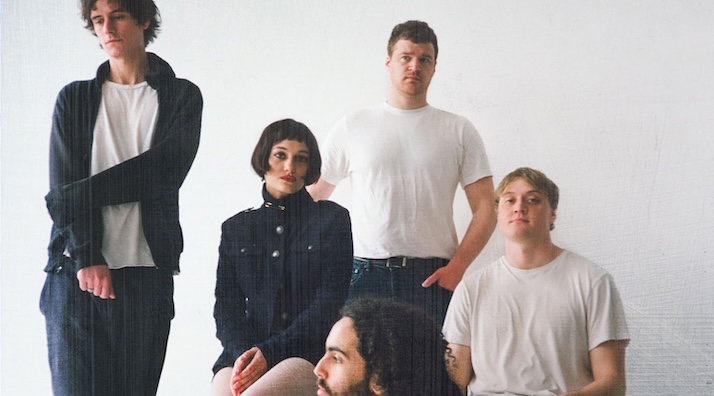
Photo by Jimmy Quinn
It’s easy to make an album about identity. It’s much harder to make one that actually understands how unstable identity can feel.
On dollhouse, Brooklyn’s Slow Fiction turn that instability into something expansive. The band’s debut LP, released via Tight Knit, is interested in the versions of ourselves we perform, the people who watch those performances, and what remains when the audience disappears. Across 11 tracks, Julia Vassallo, Paul Knepple, Joseph Skimmons, Ryan Duffin, and Akiva Henig build an indie-rock record that feels restless without ever becoming directionless. It’s textured, occasionally abrasive, often beautiful, and most importantly, willing to sit with uncertainty.
“junior year” immediately establishes the album’s central tension. “Who are you / When no one’s looking back or through?” Vassallo asks, turning adolescence into something larger than a coming-of-age memory. The song is about attention, validation, and the strange pressure to construct a version of yourself that other people will accept. Its guitars feel appropriately unsettled, giving the track the nervous energy of someone still trying to figure out where they belong.
That question of perception expands on “ninetynine,” where ordinary life becomes theatrical. “They’re the ones you want to see / A television scene,” Vassallo sings before the song ultimately asks us to turn the cameras off. The contradiction is the point: we want to be seen, but we also want control over what people see. Sometimes the camera isn’t even being held by someone else. We’re holding it ourselves.
The band is strongest when they allow those contradictions to remain unresolved. “mouthpiece” shifts that tension into a relationship, where intimacy and control become difficult to separate. “Take my face off, baby, better go it alone,” Vassallo sings near the end, a striking image after spending the song caught between dependence and resistance. On “bottle episode,” that emotional mess becomes heavier. The narrator reflects on a past relationship where someone made them feel insignificant, but now understands the relationship might have stemmed from a basic misunderstanding. “I never knew you at all” lands less like a revelation than an exhausted admission.
Then the record slows things down. “idle hours” and “g.a.l.s.” are some of the album’s most affecting moments because they give the record room to breathe. “Take your honest words / Throw them away,” Vassallo sings on “idle hours,” transforming tenderness into something almost ominous. “g.a.l.s.” is similarly intimate, built around the desire to remain close to someone even when language fails. These songs understand that vulnerability isn’t always dramatic. Sometimes it is simply wanting to be understood.
That vulnerability eventually collides with the outside world on “satellite,” which asks us to consider how easily human suffering becomes distant information. “It was just a headline,” Vassallo repeats, exposing the numbness that comes from watching catastrophe through a screen. The album’s obsession with observation suddenly feels much larger: Who gets watched? Who gets remembered? And what happens when watching becomes easier than caring?
By the time “turning down flowers” arrives, Slow Fiction have turned those questions inward. The six-minute closer circles womanhood, performance, recognition, and the exhaustion of having your pain turned into something consumable. “Crowdsourcing women’s pain / Awards season again” is blunt, but the song ultimately becomes more personal than political. “That was my voice in the song / That was my right, am I wrong?” Vassallo asks, confronting the uneasy distance between having a voice and knowing what to do with it.
That is ultimately what makes dollhouse work. Slow Fiction aren’t presenting identity as something you eventually solve. They’re treating it as something you continually revise. The record can be loud, dreamy, anxious, melodic, and occasionally strange. But underneath all of it is the same question: who are you when nobody is watching?
Maybe the answer is less important than finally becoming comfortable with the fact that the answer can change.
Listen to dollhouse below:

![Fai Laci Challenges the Elephant in the Room [Q&A]](https://s3-us-west-2.amazonaws.com/onestowatch-v2/i_m_g_9194-1790300404.jpeg)
![Meet dvd, Colombia’s Next Breakout Artist [Q&A]](https://s3-us-west-2.amazonaws.com/onestowatch-v2/foto2-1790271944.jpeg)