
With Split Second, Renny Conti Set Out to Investigate His Inner Life [Q&A]
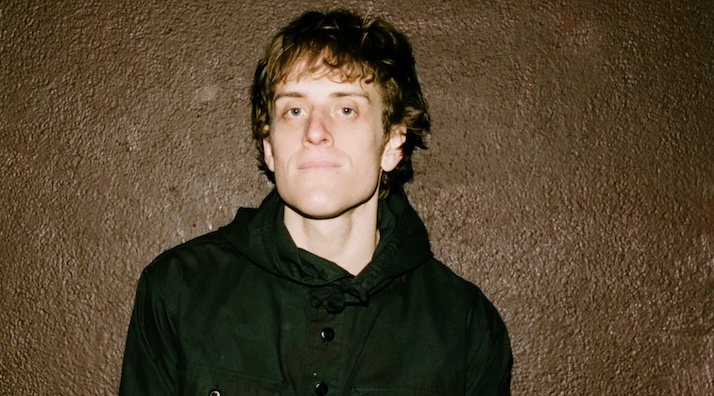
Photo by Gabe Long
Standing atop the balcony of NYC’s Bowery Ballroom for Renny Conti’s opening act performance on the Kevin Atwater Achilles Tour in May of 2025 was a near celestial experience for this writer and his four guests. Conti, and his trusted accompanist Isaac Stalling, performed a set of riveting folk and Americana fare, utilizing dual guitar tones and intertwining vocals to resemble something of an odyssey. A crusade to find ethereal space within the music itself and highlight Conti’s unvarnished lyricism.
“The reason the Bowery show was so good is because Issac and I felt really connected to the music, and each other, since we had already spent two weeks driving around together,” Conti said, during our recent in-person conversation at Swallow Café in Brooklyn Heights, the culmination of more than a year of chasing said conversation.
Conti’s new record, Split Second, is out now. The project was developed and created in the wake of three formative and calamitous events, all transpiring in rapid succession, around the midway point of 2024. In their aftermath, he shut down, left New York, and later returned to rediscover himself, hustling with his nose to the ground to do so. The most prolific of these events, the loss of his brother, is touched upon in this interview, though much of our mutual examinations surrounding grief have been omitted.
Even so, Conti dauntlessly documents his grief, and its repercussions, across this record. “September, 2005,” a lyrical and melodic highlight, reveals him as wounded and doubtful, yet capable of channeling his pain into art: “Prospect Park, I’m sitting up straight with the knowing posture of a monk/ It’s May of 2024 and I’m writing to get myself out of a death-induced funk.” A scrapped verse of the song expanded the scope of his moral compass, detailing Conti’s apprehension and existential dread in the wake of pertinent global issues. “I was like, ‘I need to fucking write this shit,’ he said, candidly. “Super narrative, super clear, almost like journaling.”
Additional tunes like opening track “Split Second,” “Water’s Edge,” “Some Smoke,” and overall musical apex “Leaving The Zoo” broaden Conti’s prolonged internal dialogue of anguish. Both “Split Second” and “Water’s Edge,” the latter written under the influence of cannabis, attempt to capture feelings of immediacy and numbness: “And it’s always there, like a trusted friend/ From the very start, to the very end/ And I see it now, and I see it then.” The former, one of several tunes bearing somewhat accidental likeness to that of heartland rock material, contains a similar spirit to that of Bruce Springsteen’s The Ghost of Tom Joad record.
Undoubtedly, no song on the record is as affecting as “Leaving The Zoo.” Featuring grippingly earthy background vocals by Gabe Grabovac, Conti successfully concocted an evocative sonic landscape that is both elongated and garbled, though structurally enthralling. Further in the track list is the bohemian-leaning “Desert Cold,” a rare offering of rhythmic reprieve, further adding to the musical diversity of the project.
With Split Second, and in his live performances, Conti challenges listeners to tolerate painfully intimate retellings of an impossibly harrowing year while he himself is tasked with freshly and repeatedly interpreting these songs, and the memories behind them. A truly inconceivable task, but one Conti himself has accepted. He hopes you will, too.
OnesToWatch: What kind of art you were exposed to growing up, and did that art inform the way you perform?
Renny Conti: A couple of things come to mind. The first shows I ever went to were in the hardcore scene… post hardcore, emo-adjacent bands. One of the first was Touché Amoré and Title Fight at this venue called 924 Gilman in Berkeley… it changed my whole life. Between the songs, they gave speeches about community. It’s so much about the scene, and the people, as much as it is about the music. The music is the thing that brings people together. After high school, I really got into my local hardcore scene. There was spoken word, and poets who would do sets at shows at churches or house shows. DIY spaces mostly, all throughout the Bay Area. It was so disconnected from whatever the music industry is. I knew there WAS an industry, but I never thought of it as something I would participate in. So, watching those people perform, there’s no artifice. When I first started making music at 14-15, I learned that it’s about making music that only you can express yourself from. Who you are at your core. Now, when I perform, I always try to do that. Even if it sounds like shit. At the end of the day, it’s about connecting to what you’re singing about. For me, what makes a show good is if I’m connecting. In a good show, I’m not thinking about anything except for playing the song. A bad show, I’m in my head. There’s friction between me and the music. My mom, who is a songwriter, always told me to think about the meaning of every line. It’s almost like meditating.
Do you think most audiences are up for the challenge of understanding what you’re doing up there?
[Pauses and grimaces] I have noooooo idea. I mean, I hope it’s accessible, but I trust that if someone connects to it, that that’s the right audience. If someone doesn’t connect to it, that’s totally fine. When I think of formative shows I went to, it’s my favorite moments of my LIFE. I hope I can do that for somebody. I still don’t know if I have, and I don’t really think about it, because I’m just trying to think about the music.
When you’re having an off show, and you feel there are extemporaneous factors working against you, what performative aspects do you think you lose?
From my perspective, I think I lose the point of it all. The music I make, and the reason I make music, is about honesty. The reason I write songs is because it’s a way for me to investigate my inner life. When I’m up there, and I’m not connecting… sometimes you just CAN’T, you know? It sucks. I can really get down on myself about that. I don’t know how noticeable it is for the audience. Hopefully, it doesn’t happen that often.
How would you define the difference between the music you were making prior to the events of 2024 versus after?
From a recording music standpoint, I remember feeling really ambitious immediately, because I didn't really have anything else. It felt like there was like nothing to lose. I was like, “I’m gonna make a BIG record.” That's what I threw myself into, and I ended up making my self-titled project at the end of that year. I guess before that, I was just recording at home and trying to make really resourceful records. I wanted to try to make something that feels like all the records I love. I need scope.
From a writing standpoint, it was kind of the same. It feels like, equally, I've had more things to write about, and it also feels like I've had less to write about because I’m so much more confused about how I feel. So, it's not as clear. Writing from a place of grief is really difficult, and sometimes music feels like it's not enough to express how you feel. There's that Mount Eerie song “Real Death.” He's like, “Death is real, it's not for writing about.” It's poetry, and it's… not the same, you know? Sometimes, I feel like it’s cheap to go there. You feel like not wanting to have anybody be involved in a moment like that.
What notes do you think your brother would give you on this new music?
[Renny pauses and laughs] Creative notes? That’s SUCH a fun question that I have NO IDEA, like…
… What was his number one thing that he had for you?
He was never critical about my music. He started engaging, and listening, to my music pretty late in our relationship. There was never anything technical, so, it's a fun question because, maybe he had thoughts that he didn't share, and I've never thought about that. I always think about the emotional impact I had on him, but I would love to know of any technical criticisms he had. Maybe it would have been beneficial, or helped the record sound better.
He put me onto all the music that shaped me… all the punk and hardcore bands like Black Flag, Misfits, and Minor Threat, then Elliot Smith and Bright Eyes, and weird techno music and all sorts of shit when we were really young, too. We were also listening to Dropkick Murphy and like, NOFX, and some contemporaryish late 2000s bands. I always think about him… our musical relationship is my entire reason for making music. So, I made music, in a way, to serve those influences so that I can preserve his memory. He plays guitar on the last song of my self-titled album. It’s just an old recording of him playing guitar that I ran through tape machines and mastered, because I thought it would be cool to have something of a posthumous collab.
Is the third verse, or bridge, whatever it is, of “San Francisco, 2005” something that you had in your notes, and were trying to find a home for? Or, did you write that knowing that you wanted to base the song around that part?
No, I wrote that song in one stream of consciousness. A very in the moment writing session. When I came back to New York and got settled, I was working full time, just trying to make money. I was so angry. And then I wrote that song and demoed it in an hour. I was like, “I need to fucking write this shit.” Super narrative, super clear, almost like journaling. I had to get it out to organize my thoughts and memory.
I noticed that “San Francisco” is the only song that has a second version. Was there a version before this current one? Or is that just a technical thing?
There is another verse to that song, which was the initial third verse, but I took it out. I'm remembering now, but it was right when all of the Palestine stuff was coming out in the news in this really big way. I felt so overwhelmed by death, and the world, and I was like, “Holy fuck, dude. It feels like everyone and everything is dying.” So, I wrote this third verse, but I took it out. It was very cathartic, but I don't know.
Is the musical gap between “Mona Lisa,” “Leaving The Zoo,” and “Waters Edge,” for starters, informed by the grieving process, or is that informed by the desire for sonic variation?
Well, all those songs came in at different times. Months apart. “Water's Edge” was the only song on the record I wrote stoned, which is why it’s so slow, I think. I was having a really weird experience of anxiety. There's a really intense darkness that comes with the news of someone passing. When I listen to it now. It feels like a sonic reflection of that level of heaviness. With “Leaving The Zoo,” it just ended up being about that again. And even in the moment, I was frustrated, because I felt like I couldn’t write about anything else. “Mona Lisa” is a lot about getting back together with my girlfriend. We broke up for that whole year, and that was a pretty trippy thing. We had both suffered losses, and that's probably partially why we came back together.
Hearing you talk now, I can definitely hear that you are a low tenor or a high baritone. When you were singing those really low parts on “Leaving The Zoo,” I was like…
[Laughs] That's my friend Gabe. It is an octave lower. Gabe is an awesome songwriter. He has music under the artist name gggggggggggggg. He and I were in choir freshman year to senior year of high school, and he was the bass. I always have him come in, and I love that he can do the low shit.
Can you hit those notes?
No. Not in the same way. Especially when you hear him live, or you hear his voice, he really has a resonant, proper base voice. It's kind of a nice tool to have that I can be like, “Hey man, do you to come and do some really really low shit?” I need to take advantage of it more, actually. I love working with him.
When you hear it out of headphones, you might not hear it as well. But with headphones on, it's right there.
It's pretty up in the mix. The background vocals on that song are me, my guitarist Isaac, Gabe, and then Samia.
When you adapt some of these songs live, will any of it change to an even bigger arrangement, or would you keep it relatively similar to what is on the record?
Just for the touring logistics, it's just two electric guitars, bass and drums. And we just play the songs the best we can on lead parts. But also, with the full live band, my touring philosophy is to make sure everyone is happy, rested, and fed. Once that’s there, I'm like, “I'm bringing you guys on as musicians that I love, and you all know the songs really well, so I want you to play whatever you feel.” So, there's a lot of improvisation.
What has been your favorite moment of improvisation that you can pinpoint as a moment where somebody went off the cuff?
Isaac's solos are always really special. What he does sometimes is he'll come up with counter melodies to mine, and sometimes I'm singing and I'm thinking, “I wish that was in the recording.” But then, he doesn't even remember what he did, because he's just vibing.
Would you say that this project, from a sonic perspective, blurs the line between heartland rock and shoegaze?
I'm not a big shoegaze listener. I really like the Cocteau Twins. I'm not really into Slowdive or My Bloody Valentine. I've tried so hard to get into those records, but it's not in my wheelhouse. For me, it's more of the slow core genre that I truly connect to. It was a lot of heavy guitars, and really slow music that I think, when I was making this record, I was super into. The heartland rock… I really like Tom Petty, but I'm not really a Bruce Springsteen guy. I guess, like, Americana, classic singer-songwriter stuff.
What are the factors that go into balancing the different soundscapes of this project, and does that at all affect how the project is sequenced in terms of track order?
The genres and the soundscapes all came in when I was arranging, and then when we were recording and picking instruments. I arranged everything before, and then we went to the studio and tracked all the arrangements. It’s just straight up from music and artists that I love and really admire, like Big Thief. So, from a production standpoint, I’m trying to trying to find stuff from them, and someone like Aldous Harding. My favorite producer is this guy named John Parish. He did Andrew Savage from Parquet Courts’ solo record. He does a lot of PJ Harvey stuff. He has his own music from the early 2000s. Everything he makes is really close to the ear, which I do a lot on this record. That's my favorite type of production. I made everything at home, and I would try to make it sound like the big records I love. I tried to learn what I like, and what I don’t. I'm still trying to figure that out. When I listen to it, I always wish things sounded a little different. It's little things, but, overall, it’s influences from records I love and trying to make a record that feels like all my influences slammed together.
Listen to Split Second below:
![Fai Laci Challenges the Elephant in the Room [Q&A]](https://s3-us-west-2.amazonaws.com/onestowatch-v2/i_m_g_9194-1790300404.jpeg)
![Meet dvd, Colombia’s Next Breakout Artist [Q&A]](https://s3-us-west-2.amazonaws.com/onestowatch-v2/foto2-1790271944.jpeg)