
Bay Area’s Own Yatta Bandz Talks Songwriting, Vulnerability, and Repping His Hometown
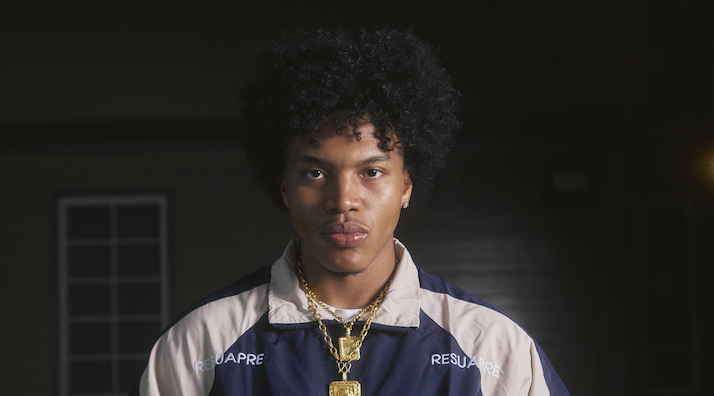
Photo by Bryan Berry
24-year-old rap crooner Yatta Bandz illustrates beauty through pain. Raised between Hayward and Oakland, California, the hip-hop songwriter sharpened his craft by letting his soul speak through his pen. Heartbreak, strife, and the everyday struggle bleed through each lyric— giving his music an element of vulnerability lost in hip-hop’s current landscape.
Like a sponge — Yatta soaked in his father’s own musical endeavors as a local Bay Area emcee. Watching his O.G. in the booth before ever writing his own songs created a confidence in Yatta, rarely seen in an inspiring artist. After first gaining attention through SoundCloud and social media, Yatta found a wider audience when a snippet of “Unseen Scars” took off on TikTok.
Now, he is preparing to release his new album, One & The Same, led by the emotional single “Out of Time.” In a conversation with OnesToWatch, Yatta Bandz discusses his musical upbringing, the Bay Area’s influence on his identity, his decision to leave basketball behind, and the responsibility he feels to create music with lasting emotional weight.
OnesToWatch: Who is Yatta Bandz? What are your influences, and what makes up your creative DNA?
Yatta Bandz: I’m a rapper from the Bay Area, predominantly Hayward and Oakland. I started being around music at a young age because my dad made music. Going to the studio with him and listening to the songs he created inspired me and made me feel like maybe I could do it one day. Once I got old enough, I started making my own songs. It became a way for me to express how I felt and get my emotions out. It was therapeutic. When I realized people could relate to it and I started receiving positive feedback, I felt like it was time to really step into music.
Your music places a strong emphasis on lyricism, vulnerability, and emotion. What were you listening to growing up?
Yatta Bandz: I have to pay homage to Michael Jackson. He was played in the house a lot during Saturday and Sunday morning cleanings. My nana would play Michael Jackson and Luther Vandross. One of my favorite songs, and a song that always makes me feel something, is “Stand by Me” by Ben E. King. The way he speaks to a woman in that song makes me think about a lot. I draw inspiration from old-school music because those songs were about communicating a real message and doing it beautifully. As I got older, I listened to a lot of Drake and Lil Wayne. Wayne was big for me because of his wordplay. He made me want to become a strong lyricist and make people think. I wanted to keep the emotion of Drake’s music but bring in the lyricism and wordplay I heard from Wayne. My dad was also a major influence because I listened to his music so much.
What kind of music was your father making?
Yatta Bandz: He primarily made energetic street music. That was his lane when he was releasing music, but I also heard the other sides of what he created. He made love songs, pain songs, and songs about struggle. Those were probably the records I liked and connected with the most. Because I knew him personally, I could understand what he was talking about differently. That helped with my development as a songwriter.
How did growing up in the Bay Area shape you as an artist and a person?
Yatta Bandz: One thing I have always loved about the Bay is how diverse it is. There are many cultures and different types of people who embrace Bay Area culture. I’m Black and Filipino, and Filipinos represent the Bay just as proudly as anybody else. Growing up there allowed me to experience both sides of my heritage. There is also a strong sense of community. Once you find your people, everybody tries to bring something positive to the table. People sometimes look at the Bay as if everyone is isolated or antisocial, but it is not really like that. People may stick closely to their circles, but there is a lot of care and camaraderie.
The Bay has such a recognizable musical history. Do you feel pressure to make music that fits the region’s established sound?
Yatta Bandz: My influence is almost like a reverse influence. My pops was heavily involved in the streets, and that is where his rap career started. But he made sure my siblings and I did not get into too much trouble. A lot of Bay Area artists look up to the hyphy movement and the energetic street rappers who came before us. I respect that, but I want to help the Bay break out of the box where people say, “This sounds like Bay music,” and then it stops there. You can represent the Bay while doing something different. You do not have to make traditional Bay Area music just because you are from there. You can still carry the culture and your roots while being vulnerable and creating your own sound.
Do you see yourself helping push Bay Area music into a new era?
Yatta Bandz: That is what I’m trying to do. I want people, especially those from where I’m from, to know it is possible to be vulnerable and make a different style of music. It may not sound exactly like the music people are used to hearing from the Bay, but it can still carry a message that people from the region relate to. Your music can be different without losing your culture or your roots.
Tell us about your new single, “Out of Time.”
Yatta Bandz: “Out of Time” is a song I had been holding onto for a while. It was in the vault because I did not initially know what I wanted to do with it. Sometimes you are your own biggest critic, and I was skeptical of the song at first. But it has a special place in my heart, which is why I wanted to use it to start the rollout. It took me some time to believe in it, but eventually I realized it was how I wanted to present myself going into this next stage. The song carries a lot of emotion. Sometimes it feels like time is running out with certain things, and you have to express yourself before it becomes too late and you no longer have the opportunity.
How does “Out of Time” introduce the themes of your new album, “One & The Same”?
Yatta Bandz: I have always believed music brings people together because listeners connect with emotions they have experienced before. A song can hit you lyrically, or it can connect with you through nostalgia. With my music, I try to say the things that people who do not write or make songs may want to express but have difficulty saying. I want listeners to know they are not alone. We may experience things in different ways and in different areas of our lives, but we all understand pain, love, heartbreak, caring about somebody, and going through difficult periods. Those shared emotions are what can bring us closer together. That is what I try to accomplish with my songs, and that is where the title *One & The Same* comes from.
When did music begin to feel like a realistic career for you?
Yatta Bandz: The first time I really put myself out there was in middle school. My friend and I would record car challenges where we rapped over whatever beat was popular or over old-school instrumentals. I started gaining traction at my school and at other schools. I would go to basketball or football games, and people would recognize me as the person rapping in the car videos. When I reached high school, I was focused on basketball. I had hoop dreams, so I did not take music as seriously at first. Eventually, it became clear that I probably was not going to the NBA. During my junior year, I decided to get into the studio and record a song to see what would happen. My first song was called “Loyalty.” I released it, and it received around 100,000 SoundCloud plays within a week or two. I released a few more songs that performed well, and I started building some traction in the Bay.
How did “Unseen Scars” change things for you?
Yatta Bandz: I recorded a snippet of “Unseen Scars” in the car and decided to post it on TikTok. At the time, I was not really a TikTok person. I was not interested in doing dances or challenges, but I understood that people around the world could see your content. It was around midnight, and I had already added captions to the video. I planned to post it the next day, but I decided to put it up immediately and see what happened. When I woke up, my notifications were going crazy. I gained somewhere around 10,000 or 20,000 followers overnight. The video continued growing and reached around 500,000 views within a few days. That was the first moment when I thought, “This is real. People may like my music more than I realized.” Before that, I was mostly having fun.
You were a varsity basketball player. What made you realize music was your true passion?
Yatta Bandz: I remember going to the park during my junior year to train. I was putting up shots and getting my own rebounds, and I started becoming annoyed that nobody was there to rebound for me.
Then I thought about NBA players and people who truly wanted to reach that level. They would probably love being outside, getting those repetitions in, even when it was hot and nobody else was around.
I realized I did not have that feeling toward basketball. But I could randomly wake up at 4 a.m., hear a beat and write an entire song. That was when I realized where my heart was. I loved basketball, and it was still a creative and emotional outlet for me, but music was my passion.
What was it like receiving label attention after your music began gaining momentum?
Yatta Bandz: After the song started blowing up on TikTok, a lot of labels contacted me. Some of the conversations felt transactional. They seemed more interested in the song and whether it could become a hit than in getting to know me as an artist. When I met Furious at EMPIRE, the conversation felt more genuine. EMPIRE brought me in, and I was able to sit down with Nima. They created a transparent and welcoming experience. They asked about me, what I wanted to become as an artist, and what my goals were. They were the first people asking the kinds of questions I wanted to hear. The signing itself was not like television, with everybody sitting in a huge room and popping champagne. It happened around the COVID-19 pandemic, so I signed the contract online after we agreed to the terms. But the way they took the time to understand me made the experience meaningful.
What do you consider your superpower as an artist?
Yatta Bandz: My superpower is being able to express certain emotions in a way that connects with other people who may be going through the same things. I want to make music that someone can revisit in 10 years and still cry to. I want my songs to carry weight and mean something when somebody plays them.
I have been blessed with a voice and a way of singing that allows the lyrics to sound good to the ear. I am also big on wordplay, but I want the wordplay to connect directly to the subject of the song. I never want it to feel empty.
Have you had an interaction with a listener that showed you how powerful your music can be?
Yatta Bandz: A woman approached me after one of my shows and told me she had been dealing with severe depression and an addiction to Xanax and Percocet. She said that after discovering my music, she began to feel like she could become a better person. The songs helped her realize she was not the only one going through those emotions, even when she did not know how to say them out loud.
She told me she had been sober for two years. About a year and a half later, I saw her at another show. The first time I met her, she was wearing a dark hoodie and ripped jeans and mostly keeping to herself. The next time, she looked completely different. She was dressed nicely, seemed happier, and introduced me to the woman she planned to marry. She told me she wanted me to see how much her life had changed. Knowing my music helped her break away from addiction and reach that point almost made me cry. That was probably the most powerful interaction I have experienced.
What do you hope listeners take away from *One & The Same*?
Yatta Bandz: I hope the music reaches more people and helps heal more hearts, as it did for the woman I met. The greatest joy I receive is hearing stories about what my music has done for somebody. That is what music is meant to do. It can have that kind of power, and having the ability to affect people positively is a major responsibility. I do not want music to feel like a job or something I am obligated to do. It is simply incredible that I can create something that may change somebody’s life. I want people to know that wherever they come from and whatever they do, they have a story to tell. When you tell your story honestly, you may reach somebody and help change their life. I hope I can continue helping more people.
What advice would you give a young creative who is being pressured to choose a more practical path?
Yatta Bandz: Whatever you consider failure will always feel better than regretting that you never tried.
People are going to tell you that you will not get anything out of your passion. They will tell you to find a steady job, make a reliable income, and choose something more practical. But they cannot see what you see when you visualize your future. You cannot live your life for somebody else. You have to live it for yourself. Maybe your music will not take off. Maybe you will not make millions of dollars or end up popping champagne in big rooms. But it is still better to say you tried something you cared about than to spend your life pleasing other people and become resentful because you never took a chance on yourself. Always bet on yourself before listening to somebody else tell you what to do with your life. Do it without expectations. Do it because you love it. That is when you get the most out of it.
![ONE OR EIGHT’s Debut EP, “EN-GÏNE,” Captures Who They Are Right Now [Q&A]](https://s3-us-west-2.amazonaws.com/onestowatch-v2/o_o_e__m_a_i_n__t_r_a_n_s_l_a_t_e_3_2_light-1791504764.jpg)
![Master Peace's Sophomore Album, 'if i don't love you, who will?' Is Infectiously Good [Q&A]](https://s3-us-west-2.amazonaws.com/onestowatch-v2/m_a_s_t_e_r_p_e_a_c_e2570-1791298378.png)