
Ryann Ross’ “On The Marsh”: A Stunning Tapestry of The Tumultuous Twenties [Q&A]
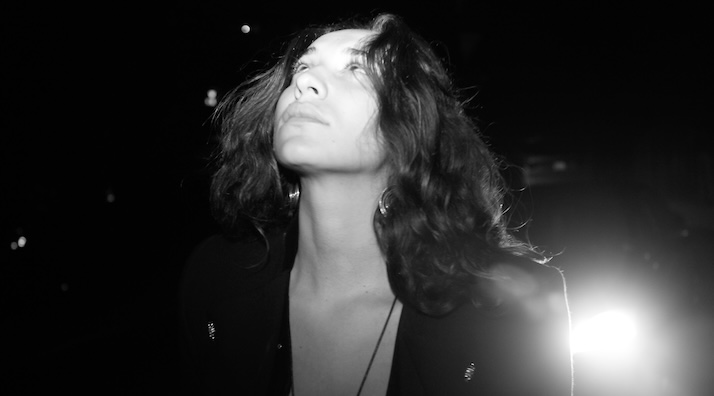
Photo by Miguel Maldonado
I believe artists are meant to find you at a specific time in life. Thankfully, Ryann Ross’ music entered mine at the very inception of her discography. It’s impossible not to be swept away the instant her striking vocals meet your eardrums, but what will keep you coming back is the vulnerability in her storytelling, the intimacy of the production, and her willingness to embrace the imperfect. We spoke about her debut EP On The Marsh, a collection of 8 songs that are diverse in both sound and experience, detailing a relatably chaotic entry into her twenties. Get to know Ryann Ross: prolific songwriter, gifted singer, and undoubtedly OneToWatch.
OnesToWatch: Tell me what making your debut EP was like.
Ryann Ross: The entire EP covers ages 18-25. I was in a relationship for 5 years and in that time, I was living abroad. 5 years is a long time, especially within those ages, so I had to write about it and just get it off my chest.
Where did you record and write?
It was mostly written in Echo Park when the Dodgers were winning. It was so loud. I had taken 2 weeks off of work to write this. I hadn't worked with anyone in years. Levi Roth was like, “I'll do it with you,” which was so amazing. I finished recording some of it in Joshua Tree as well.
When you lived in London, was that because of your long-term relationship?
Yes, I was studying abroad and then COVID hit. But, I'm British, so I could stay.
How do you think that impacted the music?
Online, a lot of gals make the joke of, “Don't get into that relationship when you meet someone at 19. It’s not gonna last!” It was 5 years, so of course it was impactful. I'm from a small town in Jersey and I started dating someone from a different background, which came with a different power dynamic. “Blubird”, specifically, is about coming home after you’ve been gone for a long time. I was in my childhood bedroom after insane things had just happened to me, but I had no one to talk to about it.
The instrumentation is so lush, detailed, and diverse throughout. How was that achieved?
My producers Levi, Richard Pichura, and Jack Riley. Usually, I just start with guitar. The people I work with, I trust them so much. They love instruments and play them really well. They understand the musicality and what I like.
How do you find cohesion using modern sounds while pulling classic references?
I was never properly vocally trained, so everything I’ve learned is from listening to a lot of music over time. It wasn’t until around 3 years ago that I started covering Billie Holiday. It came from a different part of my throat, which taught me a lot. R&B music is beautiful and I definitely learned a lot from it, it’s why my voice sounds the way it does. But, I drew back from the genre and experimented with different textures, like Fiona Apple for example. Levi said when we were writing, “You can just do whatever you want. Isn't that crazy?” I hadn't written in so long, so I didn't trust myself at all, which is really sad. That’s what prompted me to do those high notes in “Sleep Talk.”
I'm so glad that you kept that in.
It's crazy, because it seems so obvious. Sometimes you need someone to remind you there are no rules. When people say, “Your voice is so suited for R&B,” everyone just assumes that's what you'll make. But, it doesn't have to be just that. When I'm writing, I don't really listen to references. People will tell me after what it sounds like.
Tell me about your background as a musician.
I actually wanted to be an actress at first because of my sister. I got to watch her journey in acting and I thought she was so cool. I went to Lee Strasburg for 8 years, studying method acting. I loved it because I didn't know anything else. When I was there, they were like, “You can kind of sing.” Going through my first heartbreak when I was 16, I decided to go get vocal lessons. He didn't teach me anything, we just yapped a lot. [Laughs] That was when I started writing really bad songs and singing.
My parents did put me in choir and I hated it at first. But the head of the choir was a Harlem pastor. She railed into me. I was the only white kid and she was like, “You're gonna get it way easier than everybody else. But your voice is a gift and you should treat it as such. You can’t go out there and make it all about you because it's not.” From age 13, that was instilled in me. I loved her.
When you win a GRAMMY, you have to shout her out.
Literally. I only knew her for a month out of 2 summers but she impacted me a lot.
Do you think there's anything about your time studying acting that you bring to the music?
When I start performing, I might use some of those techniques because I get really bad stage fright. That's what a lot of artists do, build a persona and lock into character. Even if that character is yourself.
Are there any films that inspire you?
I've been bringing up the Poor Things soundtrack a lot. I feel like people don't watch music videos anymore, which is really sad because I think a great way for people to experience the music would be a visual. Like Across The Universe or something.
What’s your songwriting process?
I don't bring anything into the room. I just let it live where it needs to live. Once in a while, I'll have a melody I start singing but I don't have any instruments to play on. It’s so crazy not not having anything to pair it with. My new producer's name is Julian, who will play on piano or guitar and then I'll sing a melody on top. I like when my producer can write, because we’ll bounce off each other. That’s how we start and then I kind of let them do whatever they want.
How did it feel commanding the studio for the first time?
With “On The Marsh,” I was like, “I want an organ in here.” Levi was like, “I don't really think it works.” But it’s my song, so I made him do it. [Laughs] It felt great to do that.
Where does the EP title come from?
Because I was in the countryside during COVID, I was by myself a lot. I would walk down to the marsh and spend a lot of time there.
Tell me the perfect setting to listen to On The Marsh for the first time.
That's a really good question. Now that you said that, I'm like…on the marsh! Some of the songs are uncomfortable. Maybe sitting on a grassy knoll, having some wine and being introspective.
Are you a big music listener? It sounds like a crazy question, but a lot of artists I talk to have been telling me they aren’t.
I don’t listen to music when I'm making it. Then my friends will show me something and I'll be like, “Oh, that's really good.” When I'm driving, sometimes I don't play music because it's just too much. I can’t listen to Cameron Winter unless I’m in the right headspace or I will lose my shit.
That’s the common thread with other artists, because musicians can't listen to music casually.
I wish I listened to more, though! My producer Julian has the craziest library. He knows every song and it's so annoying. When you're making music, you have to have a certain type of brain to use it, but not copy. It’s so tricky.
“First World Problems” is the perfect way to end this EP.
I wrote that during the LA fires. I started writing this record, broke up with my boyfriend, lost my job and then the next day, that happened. All in the span of a week.
That puts everything into perspective.
I had been so mean to myself. I was drinking too much, crashing out, destroying every ounce of my body. Head hung over sitting in the shower like, “Oh my God, I can't believe I'm doing this.” I started it in Joshua Tree then finished writing it with Richard. We recorded it awfully, but I just couldn't do it again. That one was really hard to figure out.
I love how raw it is. You brought up Cameron Winter, what people love about his voice is that it’s so raw it almost sounds wrong.
Yeah, there are definitely notes in there that are like, “Oh, you should change that.”
I tend to gravitate towards the imperfect. Why would anyone want to hear something flawless? It’s boring.
And obviously, I can sing. The rest of the record, no one's questioning that. I could hit the note if I wanted to, but it felt right being messy.
And it really makes sense for the subject.
Being 25/26 years old, that's exactly what it feels like. It’s like an older “Blubird”, because in that song I was talking to my younger self. In “First World Problems,” I’m talking to myself now.
It’s crazy how much time is covered on this EP. It’s a great introduction.
The mid-20s really are a wealth of craziness that gives you so much to write about. I'm so happy I didn't release music before. I love the time spent on this. It's okay to not put stuff out.
Despite the industry that pressures artists to put stuff out every week.
That is the complete opposite of how I feel. Quantity over quality, like hello?
Who are your OnesToWatch?
I love Annahstasia. Her voice is so stunning. “Sunday” is so beautiful.
Listen to On The Marsh below:
![OSTON Examines Her Own Self-Discovery From A Bird’s Eye View on Debut Album ‘Isn’t That Sweet?” [Q&A]](https://s3-us-west-2.amazonaws.com/onestowatch-v2/a_u_s_t_i_n-6-24-1790280524.jpg)
![Honey Revenge Show Emotional Growth on New Album 'Loving and Losing' [Q&A]](https://s3-us-west-2.amazonaws.com/onestowatch-v2/photo_credit__deven_bussey-_photo_aug132026,114230_p_m-1788474427.jpg)